
Understanding Mild Steel, its Properties and Applications
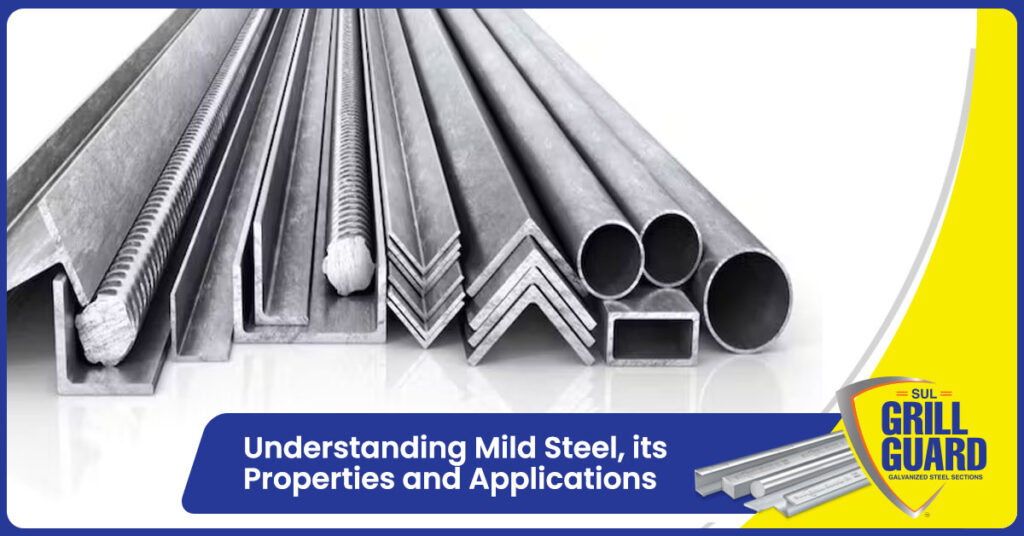
Mild Steel, a widely employed form of low-carbon steel, finds extensive application in the construction industry. This alloy, comprising primarily iron and carbon, has been utilized for countless years in the manufacturing of diverse objects ranging from tools and automobiles to buildings. Properties of Mild Steel Mild Steel is characterized by its strength, durability, weldability, and machinability. It possesses excellent structural integrity and can withstand heavy loads and harsh weather conditions, which is why industries like aerospace, construction, and automotive manufacturing prefer it. Compared to other metals, its cost-effectiveness is attributed to its lower alloy content. Mild Steel’s strength enables the creation of structures capable of withstanding heavy loads and harsh weather conditions. It is also malleable, allowing easy fabrication into different sizes /shapes, making it perfect for industries such as automotive, machinery, pipelines, storage tanks, pressure vessels, and electrical applications. Moreover, Mild Steel offers cost-effectiveness compared to other metals. With fewer alloys, its costis lower than materials like stainless steel or aluminum, making it an attractive option for budget-friendly solutions without compromising quality or performance. Melting point of Mild Steel The melting point of mild steel typically ranges from 1350°C to 1530°C (2462°F to 2786°F). This high melting point is one of the notable characteristics of mild steel, which allows it to withstand elevated temperatures without undergoing significant structural changes. It is advantageous in applications that require materials to maintain their strength and integrity under high-temperature conditions. Compared to other metals, mild steel takes more time to melt, making it a favorable construction metal in areas vulnerable to fire. Uses of Mild Steel Construction – Mild steel is extensively used in the construction industry for various structural components such as beams, columns, and reinforcement bars. Its strength, durability, and affordability make it ideal for building frameworks. Automotive Industry – Mild steel finds applications in the automotive sector, including the manufacturing of body panels, frames, suspension components, and exhaust systems. Its strength and formability make it suitable for creating sturdy and lightweight automotive parts. Machinery and Equipment – Mild steel is commonly used in the production of machinery and equipment. It is utilized for manufacturing gears, shafts, bearings, and other components due to its excellent machinability and resistance to wear. Pipelines – Due to their corrosion resistance, mild steel is preferred for constructing pipelines. It is used in gas, oil and water pipelines, offering a cost-effective and reliable solution for fluid transportation. Storage Tanks –The strength and resistance to corrosion make this steel a popular choice for manufacturing storage tanks. It is commonly used for storing water, chemicals, and various liquids in industrial and commercial settings. Pressure Vessels – The ability of this steel to withstand high temperatures and pressures makes it suitable for pressure vessel construction. It is utilized in industries such as oil refineries, chemical processing plants, and power generation facilities. Household Items – It is immensely utilized in producing various household items such as furniture frames, shelves, brackets, and utensils. Its versatility and cost-effectiveness make it a practical choice for everyday applications. Construction of Bridges – Mild steel is commonly employed in bridge construction due to its strength and durability. It is utilized for fabricating bridge beams, girders, and support structures, providing stability and load-bearing capacity. Electrical Applications – There are many ways in which mild steel is used in electrical applications, including electrical enclosures, conduit systems, mounting brackets, cable trays, transformer cores, and electrical hardware. It is suitable for providing protection, organizing wiring, supporting fixtures, and facilitating efficient energy transfer in electrical applications. Welding Rods – Mild steel is commonly used for welding rods due to its favorable properties for welding processes. Versatility of Mild Steel Mild Steel’s malleability allows it to be shaped without compromising its structural integrity or durability. Where welding and traditional cutting methods to derive a certain shape may fail, mild steel is perfect for making custom parts like furniture frames, automotive components, and pipes. This is why mild Steel is highly sought after by industrial companies. Purchase Premium Grade Mild Steel from HMB ISPAT Pvt. Ltd. Purchase mild steel from the HMB Group for quality-assured products, a wide range of options, competitive pricing, exceptional customer service, and timely delivery. Benefit from our years of industry expertise and commitment to meet your specific requirements. We ensurethat you will have a seamless purchasing experience with us. Build your window, staircase, and balcony grills or collapsible gates with HMB Group’s sturdy and shiny GRILL GUARD – galvanized steel sections which are the perfect solution for any climatic condition, please contact us at: +91 33 66735500 or info@hmbindustries.com, or visit our website: https://hmbgroup.co.in/backup/.